

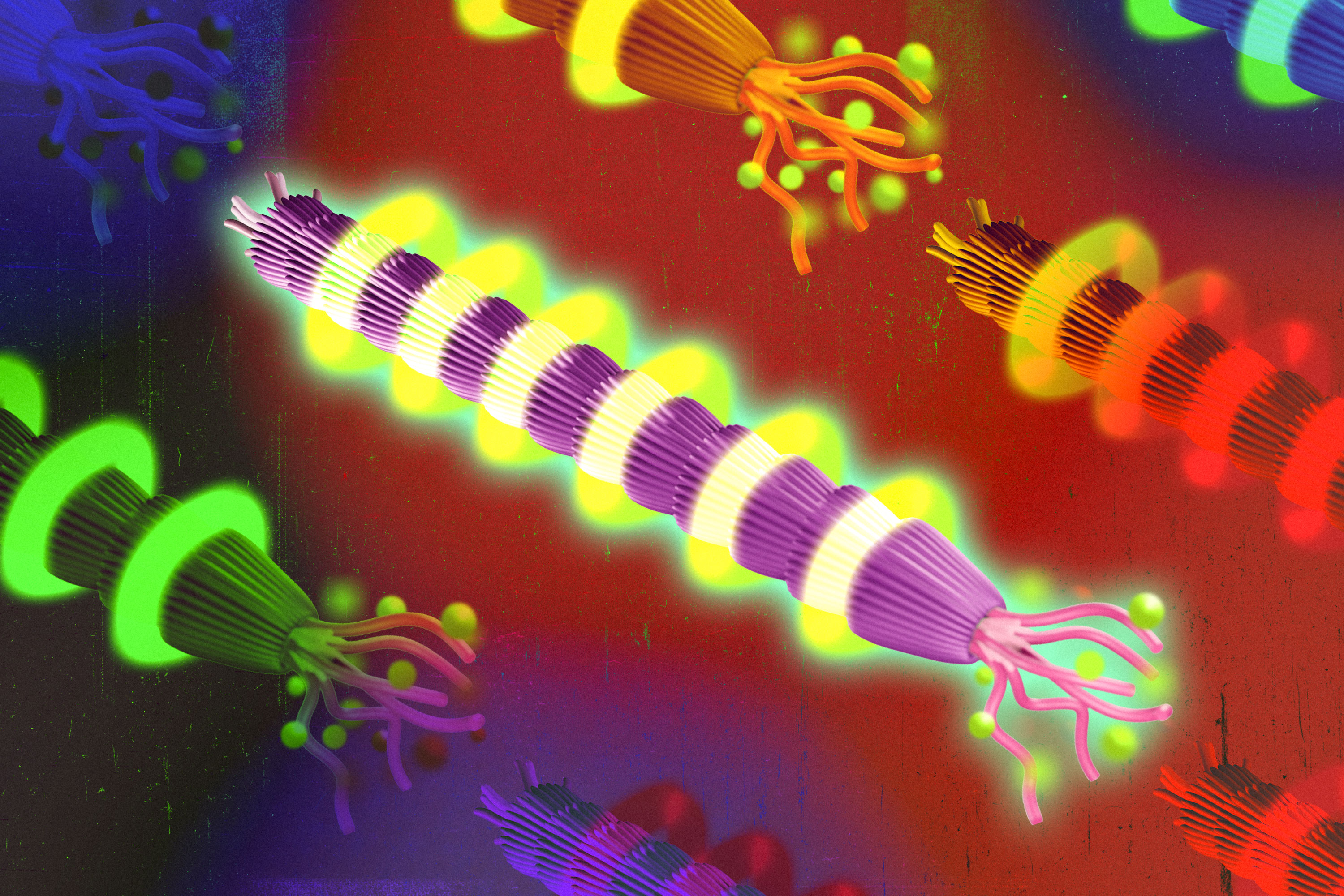
The particles carry a customized dose of cancer antigens that can provoke a strong immune response against tumors.
A nanoscale particle with a unique structure, developed at MIT, holds potential as a customizable delivery vehicle for personalized cancer vaccines.
I’m not a researcher or anything, but in this case it does seem to prevent new cancer.
Essentially, they modified a harmless bacteriophage to carry a neoantigen common to a form of mouse colon cancer and provoke an immune response. This taught the mouse’s immune system to attack when it detects that neoantigen in the future thus preventing tumor formation.
They did previously use a similar technique to attack existing mouse tumors and are working towards using it to treat other cancer types.
If a similar structure is found to be common in human colon cancer, a bacteriophage could be created to prompt a person’s immune system to attack cancer cells as soon as they appear or treat people who already have colon cancer. This seems like a very exciting discovery if it translates to a human treatment.
While you are right in principle, what you are quoting is exactly what I was talking about. The cancer that was introduced to those mice was known beforehand and the vaccine adapted to it. Similar treatments have been available for melanoma for a few years. It’s actually insane considering how much of a death sentence skin cancer was when I was in med school 12 years ago.
However this is a case of similar antigens in different cancers. This is sadly not the norm. While this might have some effect in this very controlled experiment, a general vaccine is unlikely. We might be able to get immunization for specific cancer subtypes, what is nor likely though, is that we do molecular testing on a tumor and then apply targeted therapy as a vaccine.
We have a molecular tumor conference at our university where we apply exactly these principles. It’s a very exciting time and I see my future as a oncological surgeon somewhat endangered, however this type of treatment will still need decades to be brought to mainstream and most likely be extremely expensive in the beginning
Edit: I reread the whole article after my reply, it was not a case of cross tumor antigens, it was two different vehicles for different cancers, one melanoma, one colonic cancer. So no vaccine in the typical sense