

Onno (VK6FLAB)
Anything and everything Amateur Radio and beyond. Heavily into Open Source and SDR, working on a multi band monitor and transmitter.
#geek #nerd #hamradio VK6FLAB #podcaster #australia #ITProfessional #voiceover #opentowork
- 14 Posts
- 7 Comments
 2·21 days ago
It’s telling that in this discussion there’s no mention of the ITU, the FCC or any form of discussion about interference or other spectrum users.
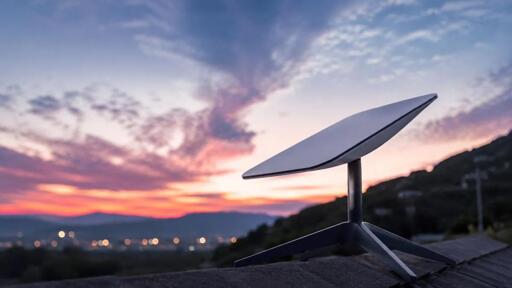
Since radio spectrum is shared globally because radio waves don’t follow political boundaries, it’s coordinated by a UN body called the ITU, the International Telecommunications Union.
There are a few frequency ranges set aside for so-called ISM (Industrial Science and Medical) use.
The 2.4 GHz band was set aside for such use and together with Wifi, Bluetooth and baby monitors, it’s used for all manner of other things.
Since the range at low power is quite short, many devices can share the same frequency and not interfere with each other.
Here’s some background.
 33·24 days ago
If I remember correctly, my understanding is that the fridges were running an ancient version of nginx, had the username admin,
no passwordthe password is reset daily to … the current date and based on the information printed before logging in were easily found with a search engine.The “hack” can apparently be achieved with a single line of bash, using curl to make the connection.
I’ll see if I can find the thread that discussed/announced it, but as an ICT professional, this doesn’t appear to be a “hack”, rather a set of unlocked doors that someone bored enough tried the knob on.
Edit:
Sorry, remembered the password incorrectly.
Source: https://cyberplace.social/@GossiTheDog/117429502412235079
This is not limited to CompSci graduates and gets worse the older you get.
It’s also not limited to CompSci.


It’s true, but it’s not obvious if you’re new to the fediverse, since until now the closest we’ve had to decentralized communities online is Usenet and that’s only familiar to you if you’re been online for 30 years or more.

I think it depends on where you go. I’ve seen lots of supportive behaviour across the fediverse.
This is what I wrote about this on 2018-01-07:
What is amateur radio? What’s not part of the hobby and what is?
The more you dig into this, the deeper the rabbit hole goes. I’ll start with an analogy to set the scene.
In aviation, Sir George Cayley was the first person to investigate heavier-than-air flying vehicles. He invented the aeroplane in 1799. The first full-sized glider, built in 1849 carried the first person in history to fly, the ten-year-old son of one of his servants. Since then the Wright brothers made their flight at Kitty Hawk. We saw the invention of commercial aviation, the turbo prop, the jet engine, the space-shuttle, helicopters, drones, rockets, hot-air balloons, the Hindenburg, the Goodyear blimps, hang-gliders, gyro-copters and many, many other contraptions.
Each of those are considered aviation and the person controlling the device is considered a pilot.
In amateur radio we talk on the radio.
We also create repeaters and talk on them. We link them together using what ever technology is available. We make it possible to connect to such networks using software such as Echolink, AllStar Link, IRLP and other internet based systems. We create digital networks with DMR, use WSPR to exchange information, make contacts using CODEC2, have contests using CW and Morse code.
We build software defined radios where we use computers to decode and encode radio signals, test back scatter using all manner of signal processing, use packet radio, RTTY, Hellschreiber and bounce signals off the moon and nearby meteors or an overflying aircraft.
We make auto-tuners with a Raspberry-Pi or an SWR meter with an Ardiuno. We build valve based amplifiers and program mp3 voice-keyers, GPS lock radios, map propagation using the internet and have a rag chew on the local 2m repeater.
We investigate 13cm propagation, do experiments with amateur television and we set up radio stations on top of mountains, in light houses and on remote islands.
All of this is amateur radio, and frankly I’ve only just scratched the surface.
There are heated discussions about if a linked repeater using the internet to create the link is real amateur radio or not, whether using your mobile phone as a node on the Echolink network is real amateur radio or not, if using a computer to create contacts on a digital mode such as JT65 is real radio or not.
Each of these questions highlights a misconception about our hobby.
There are no boundaries in amateur radio. We’re a bunch of inventors, mavericks, people who attempt the unthinkable, try the impossible and make progress.
There are people who are passengers on planes, and there are people who fly them. There are people using technology and there are people who invent it. We have a unique perspective as a community. We have the ability to imagine something that doesn’t yet exist. Why would you spend any energy on whether that thing is real amateur radio or not?
Amateur radio is a myriad of things, some of them related to antennas and radio spectrum, some not. This hobby is what you make of it, so go forth and invent something, try something, get on air and make some noise!
I’m Onno VK6FLAB
Source: https://podcasts.itmaze.com.au/foundations/20180107.foundations-of-amateur-radio.txt