The latest surge in fossil-fuel prices means it is now up to nine times cheaper in the UK to drive an electric vehicle (EV) than a petrol or diesel car, shows Carbon Brief analysis.
By “nine times cheaper,” they mean the fuel for the EV can cost as little as 1/9th as much as the fuel for a gasoline / petrol car.
That’s great, as far as it goes, but depreciation per mile is usually a bigger cost than fuel. Other costs like registration taxes, insurance, and maintenance shouldn’t be expected to follow this 1/9th pattern either, of course. You’re not going to switch to an EV and find your total expense drops to 1/9th.
It feels to me like they’re telling an incomplete story on purpose.
Depreciation is irrelevant and only brought up by combustion promoters. A car is a tool, not an investment in itself. The only relevant metric is overall yearly cost until the car dies.
Changing cars every few years, which is where depreciation matters, is an expensive luxury no one actually has to play.
No it’s valid argument as 2nd hand ev market still basically non existent in majority of the world. Solid state batteries are set to ship next year which will further depreciate all EVs while ICE vehicles have been solved 20 years ago.
EV brands tend to be less trust worthy too. For example here in Thailand 2nd biggest chinese brand (Neta) just went bankrupt tanking resale value.
Where did you get this idea? EV’s go through brakes and tires faster than their ICE equivalents because of the extra vehicle weight.
Oh my, I think you just showed your hand about lack your of experience on the topic.
EVs (and many hybrids for that matter) use the brake pads significantly less than ICE vehicles because most of the braking energy is recovered from regen. I had a Prius for 9 years and sold it with the original factory brake pads still on it, with likely another 4-5 years of life on them.
My EV’s brake pads are still at 95% life even with the car being 4 years old.
I think its fair many don’t know about that. Its basically like engine breaking on ICE cars, but better as you get to recapture the energy. I have a motorcycle and often engine break.
Sounds like big oil propaganda you’re spouting. These are the kinds of talking points I hear from right-wing media.
The truth is EV technology has advanced quite a bit in recent years, and the batteries don’t deprecate as quickly as the anti-solar crowd still claims.
And as someone else already pointed out, EV maintenance is cheaper because there are less parts.
And road tax for EVs is bullshit, but the reason for it is that combustion vehicles already pay it because it’s factored into the price of gas. Or maybe that’s not the same in the UK?
Also, the headline doesn’t claim that the total expense drops to ⅑th, it says the cost to drive it does. That’s a very different claim from the one you’re pretending they tried to make.
depreciation per mile is usually a bigger cost than fuel.
OK, this might be something that a fleet manager would care about, but the average driver wouldn’t consider in a hundred years. You don’t have to swipe your card and pay for depreciation every four days. Not to mention that depreciation has no bearing on vehicle type and little connection to physical reality at all.
And if anything, EVs maintenance is lower than expectations. There is no robust recycling of EV batteries for instance because it turns out that the batteries last reliably for 30 years and most of the ones produced are still in service. Also EVs are by nature simpler, with many components being solid state. ICE are rube goldberg masterpieces, the result of decades of continuous development.
Regardless, taxes and insurance are roughly the same. Maintenance on an EV is FAR less than an ICE car (no oil changes, fewer brake changes, fewer moving parts to replace over time). So if “fuel” is 1/9, and maintenance is just replacing the tires and putting in new wiper fluid, then driving is going to be much cheaper.
The depreciation of a car is less than the fuel costs. If a car depreciates by $20,000 over 10 years, that is less than $38/week in fuel. If it depreciates by $30,000, that is still only $58/week.
A large portion of depreciation and insurance is fixed, not based on actually driving.
And maintenance is lower with EVs as well.
Still though, you are right, 1/9 is specific to fuel, and it’s deceiving. If it.were truly 1/9 we wouldn’t be having this conversation because all vehicles would be EVs.
If it.were truly 1/9 we wouldn’t be having this conversation because all vehicles would be EVs.
“Battery-electric vehicles (BEVs) accounted for 97.8% of all new passenger car registrations in Norway through the first eight months of 2026, according to the Norwegian Road Federation (OFV).” source
“New energy vehicles (NEVs)—including pure electric and plug-in hybrid cars—accounted for a record 65.2% of new car sales in mainland China” source
Oh and don’t worry, if ICE vehicles go away, the politicians will find some way to levy an 8/9ths tax on something else to make up for not having those fuel sales.
We need to figure out how to pay for road upkeep somehow.
That’s not to say the way gas taxes are allocated to road maintenance now is perfect. Far from it. But on paper (at least where I’m from) that’s how roads are maintained.


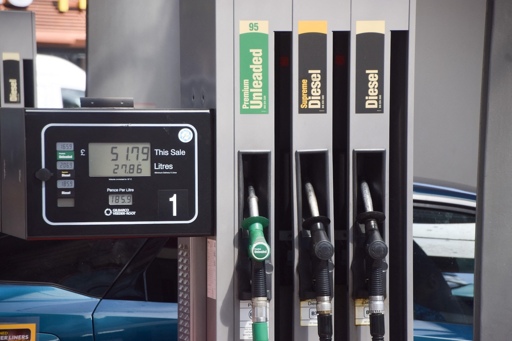
By “nine times cheaper,” they mean the fuel for the EV can cost as little as 1/9th as much as the fuel for a gasoline / petrol car.
That’s great, as far as it goes, but depreciation per mile is usually a bigger cost than fuel. Other costs like registration taxes, insurance, and maintenance shouldn’t be expected to follow this 1/9th pattern either, of course. You’re not going to switch to an EV and find your total expense drops to 1/9th.
It feels to me like they’re telling an incomplete story on purpose.
Depreciation is irrelevant and only brought up by combustion promoters. A car is a tool, not an investment in itself. The only relevant metric is overall yearly cost until the car dies.
Changing cars every few years, which is where depreciation matters, is an expensive luxury no one actually has to play.
No it’s valid argument as 2nd hand ev market still basically non existent in majority of the world. Solid state batteries are set to ship next year which will further depreciate all EVs while ICE vehicles have been solved 20 years ago.
EV brands tend to be less trust worthy too. For example here in Thailand 2nd biggest chinese brand (Neta) just went bankrupt tanking resale value.
What’s there to maintain? Even the brakes barely get used.
Where did you get this idea? EV’s go through brakes and tires faster than their ICE equivalents because of the extra vehicle weight.
Oh my, I think you just showed your hand about lack your of experience on the topic.
EVs (and many hybrids for that matter) use the brake pads significantly less than ICE vehicles because most of the braking energy is recovered from regen. I had a Prius for 9 years and sold it with the original factory brake pads still on it, with likely another 4-5 years of life on them.
My EV’s brake pads are still at 95% life even with the car being 4 years old.
I think its fair many don’t know about that. Its basically like engine breaking on ICE cars, but better as you get to recapture the energy. I have a motorcycle and often engine break.
They use regen braking for everything but very hard braking. The tyres are also generally very hard compounds to deal with the torque.
Sounds like big oil propaganda you’re spouting. These are the kinds of talking points I hear from right-wing media.
The truth is EV technology has advanced quite a bit in recent years, and the batteries don’t deprecate as quickly as the anti-solar crowd still claims.
And as someone else already pointed out, EV maintenance is cheaper because there are less parts.
And road tax for EVs is bullshit, but the reason for it is that combustion vehicles already pay it because it’s factored into the price of gas. Or maybe that’s not the same in the UK?
Also, the headline doesn’t claim that the total expense drops to ⅑th, it says the cost to drive it does. That’s a very different claim from the one you’re pretending they tried to make.
OK, this might be something that a fleet manager would care about, but the average driver wouldn’t consider in a hundred years. You don’t have to swipe your card and pay for depreciation every four days. Not to mention that depreciation has no bearing on vehicle type and little connection to physical reality at all.
And if anything, EVs maintenance is lower than expectations. There is no robust recycling of EV batteries for instance because it turns out that the batteries last reliably for 30 years and most of the ones produced are still in service. Also EVs are by nature simpler, with many components being solid state. ICE are rube goldberg masterpieces, the result of decades of continuous development.
It says “cheaper to drive” not “cheaper to own.”
Regardless, taxes and insurance are roughly the same. Maintenance on an EV is FAR less than an ICE car (no oil changes, fewer brake changes, fewer moving parts to replace over time). So if “fuel” is 1/9, and maintenance is just replacing the tires and putting in new wiper fluid, then driving is going to be much cheaper.
Tire changes would be more expensive and more frequent since EV heavier
At the same time, EVs tend to use harder tires (for better efficiency) that don’t wear out as often as softer tires that ICE cars use.
The depreciation of a car is less than the fuel costs. If a car depreciates by $20,000 over 10 years, that is less than $38/week in fuel. If it depreciates by $30,000, that is still only $58/week.
A large portion of depreciation and insurance is fixed, not based on actually driving. And maintenance is lower with EVs as well.
Still though, you are right, 1/9 is specific to fuel, and it’s deceiving. If it.were truly 1/9 we wouldn’t be having this conversation because all vehicles would be EVs.
“Battery-electric vehicles (BEVs) accounted for 97.8% of all new passenger car registrations in Norway through the first eight months of 2026, according to the Norwegian Road Federation (OFV).” source
“New energy vehicles (NEVs)—including pure electric and plug-in hybrid cars—accounted for a record 65.2% of new car sales in mainland China” source
Oh and don’t worry, if ICE vehicles go away, the politicians will find some way to levy an 8/9ths tax on something else to make up for not having those fuel sales.
Toll roads for everyone?
Where im at registration is a factor of 2/4x to make up for the fuel tax. Fun times.
We need to figure out how to pay for road upkeep somehow.
That’s not to say the way gas taxes are allocated to road maintenance now is perfect. Far from it. But on paper (at least where I’m from) that’s how roads are maintained.