I’m whistling past the graveyard on this one, in ten years I could be doing the same shit as mom. I’d have to go in the opposite direction with what to watch though, given my kid’s taste. Criterion Collection maybe.
Why do kids have such garbage taste, anyway? I’ve shown him almost 200 of the best cartoons ever made and the best work of about that many indie creators. He still prefers brain-dead Minecraft “cool guy and his dumdum friend” type content. I’ve made flawless beef borguinion and pad Thai from scratch and he still prefers shitty nuggies with ketchup. And this is considered typical. It mystifies me.
Edit: @[email protected] pointed out that this is probably misremembered, sorry 😬
I don’t know how to say this without it sounding really anti kid, but I don’t mean it like that (this is all 100% to be expected and I’m not blaming kids for how humans develop):
Kids are literally missing aspects of what we consider normal perception and cognition until they’re like 14. If you sit across the table from a 12 year old with a globe in between you, they’re liable to think that changes (adding stickers, for example) they make to their hemisphere automatically update to yours.
Kids have bad taste because they’re not paying attention to the same things that adults are. Depending on their age, bright colors and clearly defined shapes are better than a recognizable plot.
If you sit across the table from a 12 year old with a globe in between you, they’re liable to think that changes (adding stickers, for example) they make to their hemisphere automatically update to yours.
Would you mind sharing what you’re referencing with this? It sounds like you’re describing theory of mind, with an example similar to Piaget’s Mountains, but basic theory of mind is largely developed in this regard by age 5. More complex perspective-taking continues to develop, of course, but what you described would be indicative of a substantial deficit at that age
That is what I’m describing, specifically this study, but I watched it a very long time ago in its entirety in a class a long time ago. I can’t find the full video anymore, so maybe I’m remembering it very wrong, but what I remember was a globe segment in which kids up to twelve couldn’t distinguish between their side and the tester’s side, then they were 50:50, and the older kids could all do it easily. I could absolutely be misremembering it wrong, do you happen to know whether there’s a similar distinction that would first be made at that age (I’m making some assumptions of your familiarity with the subject matter based on your username)?
The specific age range (where around 50% of 12 year olds suck compared to the 14-15yos) would be Piaget’s formal operational stage, but the relevant part that changes around 12 is mostly trial & error vs deductive reasoning, and they tested that with like pendulums and fulcrums and stuff.
I unfortunately don’t remember a study or demonstration using globes (interestingly, I do recall three that happen to sound similar if you combined them all: one with a bicolored ball, the mountains ones, and one with putting stickers on dolls) but most kids are answering that style of question correctly by age 7
I can take that onboard. I think I struggle to empathize sometimes because I’ve forgotten so much of my own childhood. I was forced to grow up fast, but he won’t be.
It’s also pretty unexpected, to be fair. You can have a really interesting conversation with a kid, wherein they point out things you’ve never considered, or things you only realized in your twenties, and then they ask why you move to the side when turning in a vehicle, and you realize that they’ve still got a long way to go.
I’m not a natural with kids, but I’m a teacher (of adults), so I took a lot of child development and pedagogy classes. During the course of them, I started to think about kids as mini dementia/brain damage patients (which is not accurate, but it’s at least as accurate as all the people conceptualizing the elderly as children and maybe equally offensive), in that they can just have holes in the function of their brains and it’s hard to notice until you specifically ask them to draw a clock or something.
Allowing him his childhood only involves accommodating his bad taste for a few more years, then you can lead by example. He might choose the polar opposite just to spite you (even in a lighthearted way), but at the very least he’ll use different criteria from now.
I’m a fan of seeing the brain as a disparate bag of tricks too, but one trick that’s less reliable for me is remembering that when my progeny says some unglued emperor Nero shit
is the perfect way to describe it. I give my sister huge props for laughing, but my absolute favorite example is from when my niece was somewhere between 4-6. My sister had said no to something and told my niece to draw at the table while she made breakfast. After a few minutes, my niece called out “how do you spell’I don’t love you, mommy’?”
Absolutely mixed bag of understanding human psychology there: she knows it’s a hurtful thing to say, she knows my sister will make the leap, but she doesn’t understand that my sister won’t believe it (or maybe she does, but doesn’t realize it).
That’s one for the books. When he was three, my kid famously remarked that “My favorite green thing is nobody because nobody is green.” That still knocks my socks off.
From what I know they don’t think nearly as abstract and farsighted as adults, it’s much more concrete and direct, so they appreciate different things in the moment. But when they grow up they will look back at these memories fondly and even re-watch some of it to appreciate it better.
It’s all new to them. It makes more sense when you realise they want to explore and understand the world, starting with the most interesting parts: how people hang out together and interact.
“Cool guy and dumb dumb” say and do the same things every episode, but it lands completely differently for a kid. You think it’s lame because you’ve experienced thousands of people hanging out together, so your brain already knows what’s going to be said next, and you lose interest. They have no idea what is going to happen next, it’s crazy and interesting.
To simulate this experience, try smoking a ton of weed and watching it. It’s a good way to experience being a kid again, because your prediction and memory functions get impaired. You’ll be all like, “oh my gosh no way omegalol.”
This might be a good thing. Kids leave these kind of stuff behind when they grow up, especially if there are “grown-up” alternatives present. It’s the way of things that when Kids seek their own identity in puberty, they leave behind stuff from before as childish.
Yeah, as a kid I loved that stuff. As a cranky adult, I had “frozen fried garbage with whatever sauce you could buy in bulk” way too often in college, and I do love some meal with some time and effort behind it. You live and grow. Well, most of us. Some end up minion facebook people.
Children have extreme sensitivity to the bitter taste, it wears off as you age. That’s why they eat garbage. Consider anything remotely bitter and experiment with removing it or adapting the recipe. Ketchup is packed with sugar too, which they’re sensitive to so those are the battles you’re fighting.
Take that back right now. dino nuggies and ketchup is a hood classic. And me and my inner child will not sit for this insult. I would say stand, but my back is currently out and standing is painful.
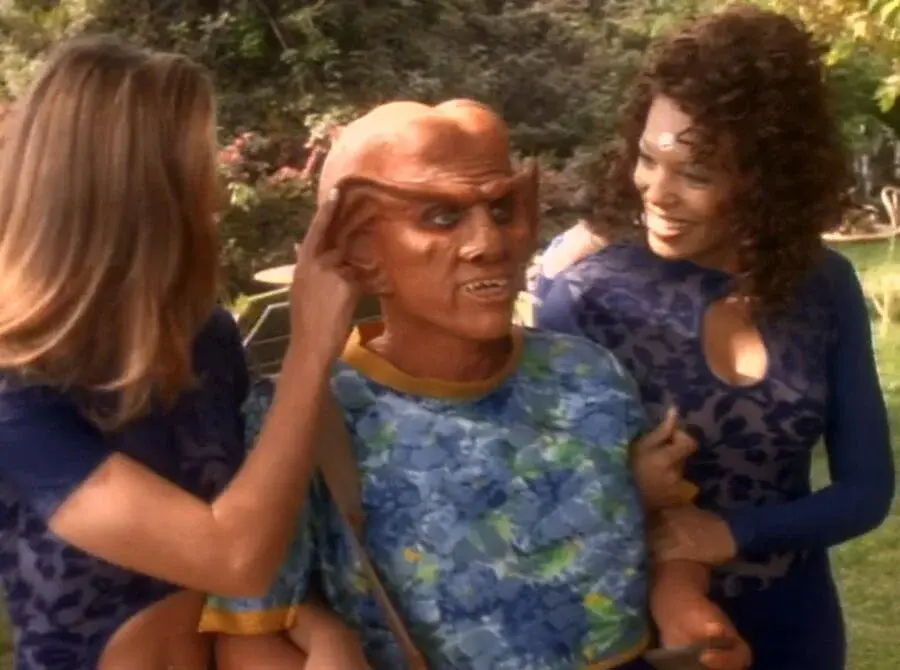


It’s working, soon she will have the house to herself again.
I’m whistling past the graveyard on this one, in ten years I could be doing the same shit as mom. I’d have to go in the opposite direction with what to watch though, given my kid’s taste. Criterion Collection maybe.
Why do kids have such garbage taste, anyway? I’ve shown him almost 200 of the best cartoons ever made and the best work of about that many indie creators. He still prefers brain-dead Minecraft “cool guy and his dumdum friend” type content. I’ve made flawless beef borguinion and pad Thai from scratch and he still prefers shitty nuggies with ketchup. And this is considered typical. It mystifies me.
For the same reason aduts have a six pack dinner. Forgive me vegans but have you seen that baby who has baccon for the first time?
Edit: @[email protected] pointed out that this is probably misremembered, sorry 😬
I don’t know how to say this without it sounding really anti kid, but I don’t mean it like that (this is all 100% to be expected and I’m not blaming kids for how humans develop):
Kids are literally missing aspects of what we consider normal perception and cognition until they’re like 14. If you sit across the table from a 12 year old with a globe in between you, they’re liable to think that changes (adding stickers, for example) they make to their hemisphere automatically update to yours.
Kids have bad taste because they’re not paying attention to the same things that adults are. Depending on their age, bright colors and clearly defined shapes are better than a recognizable plot.
Would you mind sharing what you’re referencing with this? It sounds like you’re describing theory of mind, with an example similar to Piaget’s Mountains, but basic theory of mind is largely developed in this regard by age 5. More complex perspective-taking continues to develop, of course, but what you described would be indicative of a substantial deficit at that age
That is what I’m describing, specifically this study, but I watched it a very long time ago in its entirety in a class a long time ago. I can’t find the full video anymore, so maybe I’m remembering it very wrong, but what I remember was a globe segment in which kids up to twelve couldn’t distinguish between their side and the tester’s side, then they were 50:50, and the older kids could all do it easily. I could absolutely be misremembering it wrong, do you happen to know whether there’s a similar distinction that would first be made at that age (I’m making some assumptions of your familiarity with the subject matter based on your username)?
The specific age range (where around 50% of 12 year olds suck compared to the 14-15yos) would be Piaget’s formal operational stage, but the relevant part that changes around 12 is mostly trial & error vs deductive reasoning, and they tested that with like pendulums and fulcrums and stuff.
I unfortunately don’t remember a study or demonstration using globes (interestingly, I do recall three that happen to sound similar if you combined them all: one with a bicolored ball, the mountains ones, and one with putting stickers on dolls) but most kids are answering that style of question correctly by age 7
lol 12 year olds know how spheres work.
I can take that onboard. I think I struggle to empathize sometimes because I’ve forgotten so much of my own childhood. I was forced to grow up fast, but he won’t be.
It’s also pretty unexpected, to be fair. You can have a really interesting conversation with a kid, wherein they point out things you’ve never considered, or things you only realized in your twenties, and then they ask why you move to the side when turning in a vehicle, and you realize that they’ve still got a long way to go.
I’m not a natural with kids, but I’m a teacher (of adults), so I took a lot of child development and pedagogy classes. During the course of them, I started to think about kids as mini dementia/brain damage patients (which is not accurate, but it’s at least as accurate as all the people conceptualizing the elderly as children and maybe equally offensive), in that they can just have holes in the function of their brains and it’s hard to notice until you specifically ask them to draw a clock or something.
Allowing him his childhood only involves accommodating his bad taste for a few more years, then you can lead by example. He might choose the polar opposite just to spite you (even in a lighthearted way), but at the very least he’ll use different criteria from now.
I’m a fan of seeing the brain as a disparate bag of tricks too, but one trick that’s less reliable for me is remembering that when my progeny says some unglued emperor Nero shit
is the perfect way to describe it. I give my sister huge props for laughing, but my absolute favorite example is from when my niece was somewhere between 4-6. My sister had said no to something and told my niece to draw at the table while she made breakfast. After a few minutes, my niece called out “how do you spell’I don’t love you, mommy’?”
Absolutely mixed bag of understanding human psychology there: she knows it’s a hurtful thing to say, she knows my sister will make the leap, but she doesn’t understand that my sister won’t believe it (or maybe she does, but doesn’t realize it).
That’s one for the books. When he was three, my kid famously remarked that “My favorite green thing is nobody because nobody is green.” That still knocks my socks off.
From what I know they don’t think nearly as abstract and farsighted as adults, it’s much more concrete and direct, so they appreciate different things in the moment. But when they grow up they will look back at these memories fondly and even re-watch some of it to appreciate it better.
It’s all new to them. It makes more sense when you realise they want to explore and understand the world, starting with the most interesting parts: how people hang out together and interact.
“Cool guy and dumb dumb” say and do the same things every episode, but it lands completely differently for a kid. You think it’s lame because you’ve experienced thousands of people hanging out together, so your brain already knows what’s going to be said next, and you lose interest. They have no idea what is going to happen next, it’s crazy and interesting.
To simulate this experience, try smoking a ton of weed and watching it. It’s a good way to experience being a kid again, because your prediction and memory functions get impaired. You’ll be all like, “oh my gosh no way omegalol.”
This might be a good thing. Kids leave these kind of stuff behind when they grow up, especially if there are “grown-up” alternatives present. It’s the way of things that when Kids seek their own identity in puberty, they leave behind stuff from before as childish.
Yeah, as a kid I loved that stuff. As a cranky adult, I had “frozen fried garbage with whatever sauce you could buy in bulk” way too often in college, and I do love some meal with some time and effort behind it. You live and grow. Well, most of us. Some end up minion facebook people.
Perhaps it’s one of those things where they don’t appreciate it or understand it in the moment. But then they look back on it fondly later in life.
With any luck it’s all in there somewhere… Otherwise I’ve been living well all this time for nothing!
/s
They’ll grow out of sugar-food and easy-to-consume media, and then your efforts will give them a first stepping stone to whatever they’ll grow into.
I can’t control what he grows into, I’m just going to focus on my end of the deal
That’s how parenting works, I think anyways 👍🏼.
Only one way to find out
Children have extreme sensitivity to the bitter taste, it wears off as you age. That’s why they eat garbage. Consider anything remotely bitter and experiment with removing it or adapting the recipe. Ketchup is packed with sugar too, which they’re sensitive to so those are the battles you’re fighting.
You’re right. I don’t actually remember being very sensitive to bitterness, but that’s probably a memory lapse.
It is crazy how wired for sugar kids are. I’ve known actual drug addicts who play it cooler. Bless
Take that back right now. dino nuggies and ketchup is a hood classic. And me and my inner child will not sit for this insult. I would say stand, but my back is currently out and standing is painful.
You know what else is a hood classic, heart disease. Shaddup and pass the epsom salts, will ya?
I threatened to become a nudist as soon as the kids turned 18 in an attempt to drive them out.